Pages

6.20.2011

Mola Mola!

What are molas?
Molas (mor) are colorful appliqué panels completely hand crafted by the indigenous Kuna (Tule) of the San Blas Islands (Kuna Yala), an autonomous territory in Panama. Traditionally, molas are worn on the front and back of women’s blouses; therefore they have all been previously used. The production of molas didn’t begin until the 1800's when machine manufactured fabric became obtainable through trade.

How are molas made?

The technique of appliqué consists of cutting one or more pieces of fabric in an intricate, decorative design and hand stitching it on top of another piece of cloth. Original molas were comprised of only 2 colors (mor gwinagwad) and a geometric design using broad lines. Overtime, with greater exposure to and influence from outside cultures, mola colors and designs have become more complex depicting flowers, animals, and various figures.

How to determine the value of your mola:
The mola is evaluated based on its design and color, fineness of stitching, the number of layers it is comprised of, and overall workmanship.

How to display your mola:
Mola panels can be worn, framed, made into pillows, quilts, etc. The Aware Network in Australia even crafts Molas into shoes:


How to care for your mola:
Genuine molas are very durable and have been washed several times. Hand wash in warm water.

Shop for Molas: http://www.littlemangoimports.com/molas.html


5.19.2011

20 Uses for Batik

  1. swimsuit cover-up
  2. sarong
  3. dress
  4. window covering
  5. apron
  6. table cloth
  7. wall hanging
  8. ironing board cover 
  9. tote bag 
  10. bandanna
  11. baby carrier
  12. sling for broken arm
  13. outdoor cushion
  14. line a gift basket
  15. quilt
  16. picnic blanket
  17. throw pillow
  18. scarf
  19. fabric earring holder
  20. computer and keyboard cover (keep that dust off!)
just to name a few :)

Bati
k Cloth at Little Mango Imports
http://www.littlemangoimports.com/batik.html

Comment with your suggestion. Lin
ks to tutorials are welcome!

4.16.2011

Little Mango Imports Easter Basket - WIN IT!

Get creative this Easter and think outside of the box, especially if you'd like to avoid everything that comes inside the box...candy, chocolate and everything plastic (don't get me wrong, I like sugar but in a reasonable dose!). Hackysack balls are an excellent alternative to cheap plastic eggs. Worry dolls, coin purses, friendship bracelets and other inexpensive handicrafts make great fillers too. 

Skip the basket this year and use a a fun bag. How many Easter baskets have made it to your yard sale pile or even the trash? Lastly, be sure to opt for an environmentally sustainable grass...shredded paper is my choice. 

WIN this Little Mango Imports Easter basket! Included: Guatemalan bag, three hackysack balls, two coin purses, worry dolls and, yes, some chocolate for good measure! 

How to enter: simply leave a comment below, and if you blog about our contest you’ll receive 2 entries (be sure to comment with a link to your blog). The winner will be drawn on the evening of Tuesday, April 19th (basket will ship Wednesday for arrival just in time for Easter). Good luck and thanks for playing!

Guatemalan handicrafts are 20% OFF through Tuesday, April 19th. Order your Easter basket supplies today!
www.littlemangoimports.com/guatemalanhandicrafts.html

(most order ship within 24 hours, USPS Priority Mail 2-3 days within the U.S.)


4.07.2011

Huipil Shopping - What, Why & How

What is a Huipil?
The huipil (Maya women's blouse) is the most important part of the Maya woman's costume.  She will spend sometimes months producing this work of art which is an important part of her personal and village identity.  It is usually constructed of 2 or 3 panels and nearly always handwoven on a back strap loom.  These panels are then sewn together to form a rectangle in which a head hole is cut.  The side seams are either left open or sewn up just enough to provide arm openings, resulting in a poncho-like, sleeveless blouse.


Why a Huipil?
Collect, display, wear and/or re-use. Get creative! Embrace the Maya heritage: each huipil is rich in history and tradition. Love color? Hang, drape and display huipiles...tables, walls, chairs, other furniture. The possibilities are endless! Huipiles were originally intended to be worn so sport yours: shirt, poncho, shawl....I guarantee you won't run into someone in the same outfit. Feeling artsy? Re-fashion the embroidery, brocade and/or base cloth into a pillow cover, purse, quilt, article of clothing, etc.

How to buy a Huipil?

Once you are on the hunt for a huipil to treasure, there are several factors to take into consideration when shopping. If you plan to wear your huipil be prepared to alter it yourself or have it altered.  Sorry, huipiles do not come in standard clothing sizes (that would ruin all our fun, right?). The length and width of the huipil will give you a rough idea of the size, but ask yourself (or me!) how large is the neck opening? What size are the arm openings? Are the side seams open or sewn closed? Do I want a lightweight or heavier huipil? Huipiles from villages in hot, lowland areas tend to be lighter weight while huipiles made in the mountain climates are generally heavier and warmer. Keep in mind that huipiles are designed to be worn by wrapping a corte skirt around the waist and securing it with a belt (the huipil is usually tucked in). They are not originally designed to hang over a pair of jeans (sounds cute though, right?). Many huipiles have been taken in (or it is evident that they once were) for a fitted appearance. 


If you plan to display your huipil as a piece of art, also be prepared to open seams, remove excess base cloth, or make another alteration to achieve the finished product you desire. Lastly, remember that most huipiles are essentially used clothing and some have been worn more than others (especially children's huipiles). All are completely handwoven, so rarely symmetrical. Flaws and imperfections (character, I like to call it!) are common from the weaving process and typical wear.


Huipil Care Instructions

Huipiles at Little Mango Imports are sold in the same condition they were purchased from Maya women (no altering, washing, repair, etc.). Traditionally, huipiles were washed in the river, beat on rocks, and hung to dry in the sun...makes me appreciate my machine washer!


Washing Your Huipil
machine or hand wash in cold water (mild soap) and line dry

Considerations

-
colors may bleed with washing (colors may be set with a salt/vinegar and water solution)
-loose threads can potentially snag and unravel
 
-vibrant and dark colors will fade with extensive exposure to sunlight

Shop for Huipiles: http://www.littlemangoimports.com/huipiles.html
Shop for Huipiles by Village: http://www.littlemangoimports.com/huipilesbyvillage.html
Shop for Cortes
(skirts): http://www.littlemangoimports.com/cortes.html
Shop for Cintas/Fajas (belts/sashes): http://www.littlemangoimports.com/cintasfajas.html


Guatemalan Textiles Info: http://www.littlemangoimports.com/textileinfo.html
Pronunciation of Maya Terms:
http://www.littlemangoimports.com/pronunciation.html

3.06.2011

Welcome to America! - from Guatemala to Colorado

First visit to the United States, first experience of snow, first single digit temperatures, bowling, ski racing, craft beer... Manuel Sic arrived in Colorado with a shiny new passport and heavily blue plastic wrapped bag. After running through the airport with my pass to get through security I thankfully found Manuel. I had no idea if he would make it through immigration and customs in Houston in time to make his flight, if it would even arrive on time in the midst of early February's storms (it arrived ahead of schedule actually, hence my running). You never realize how convenient it is that everyone has cell phones until they don't! Manuel did his research; he knew Denver's airport was unique so we were taking pictures before we even got 50 feet out the door.

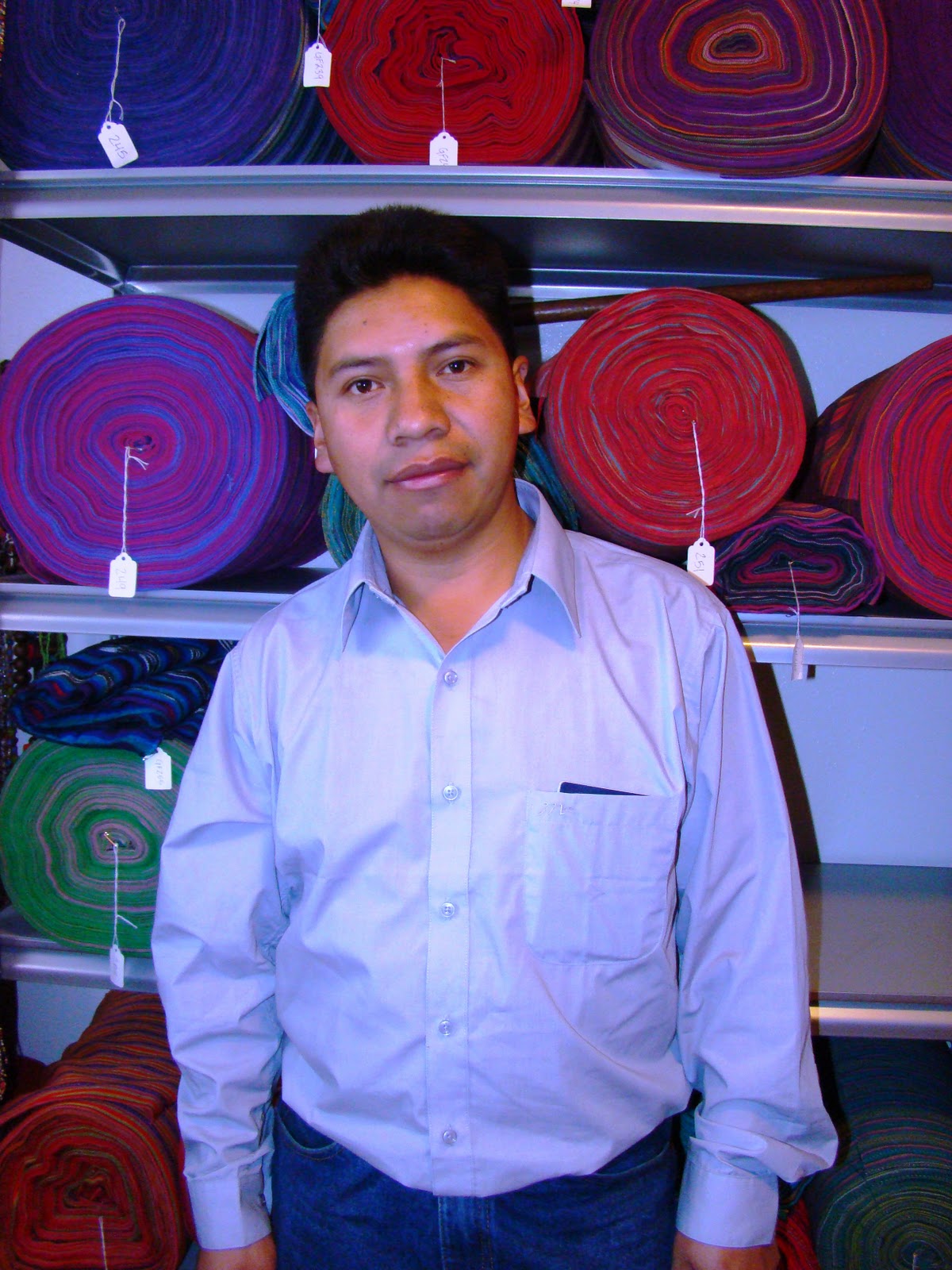
Manuel Sic is a Maya Guatemalan living in a very small village near Totonicapan, Guatemala, attending the University of Mariano Galvez for civil law. Spanish is his third language, behind Ki'che' and Kaqchikel. Manuel, with the help of his brothers and local weavers, weaves the fabric sold at Little Mango Imports. Upon Manuel's request, I sent him a letter of invitation to Colorado for him to present to the U.S. embassy in Guatemala. Honestly, I didn't expect Manuel to successfully acquire a U.S. visa, but he managed to maneuver the hoops and loops, front the $380 fee, and purchase his approximately $800 plane ticket to the United States (life savings....literally!).

Manuel visited Colorado's state capitol, Denver's Museum of Nature & Science, toured Oskar Blues Brewery, gave bowling his best shot, experienced the Rocky Mountain National Park and watched a high school alpine ski racing team practice (random I know, but I coach the team). It was incredible to watch Manuel experience so much that is so different from everything he has ever known. He marveled at the genuine moon rock, dinosaur bones and Egyptian sarcophagus at the museum…..not to mention our dishwasher, wood flowers, indoor heating, to-go mugs, and beer in the fridge.

During Manuel’s visit we discussed everything from marriage and religion to Arizona immigration law and the drug trafficking problems in Guatemala. He asked me to break down U.S. national and state governments, to explain the significance of Thanksgiving and describe Colorado’s economy. The last was tough for me and definitely made me put some thought into the state in which I live. Here’s what I came up with: skiing, tourism, grain (I just heard on NPR that Colorado produces more than half the country’s millet), cattle, beer and oil. What am I missing here? Let me take a moment to say I am not fluent in Spanish; I can speak conversational Spanish and I have a decent accent but ‘pilgrim’ and ‘millet’ are not in my vocab. Luckily my language limitations masked what I failed to remember from fourth grade social studies!

Manuel was extremely courageous to venture from his home country to the United States. Upon asking him what he expected, he said he thought Americans would be serious, but he was gladly surprised that Coloradoans were very friendly. I honestly didn’t know I had so many friends who could speak Spanish! He never seemed to be negatively affected by “culture shock”; he soaked up every moment. On the way to the airport Manuel asked me if he was a good house guest… honestly, probably the most respectful house guest I have ever had. He even complimented my cooking! I managed to acquire another pass through security and walk Manuel to his gate (all this whining about signs in Spanish in the US; I never noticed that they are actually pretty rare in Colorado!). I was sad to see Manuel go but very happy that he had achieved one of his life goals in visiting the United States.


2.01.2011

Yo-Yo Necklace ~ Guatemalan Fabric!

You can’t Walk the Dog or execute the Sleeper trick with these yo-yos, but you can still impress your friends. I made my first yo-yo necklace (pictured below) last summer, using Guatemalan Fabric! It complimented my brown summer dress fabulously, and that’s not just my opinion…honest.  A bold statement around my neck, my necklace was large and loud but definitely loved.

Make your own Yo-Yo Necklace – Tutorial: http://hideousdreadfulstinky.blogspot.com/
  • I used Guatemalan Fabric from http://www.littlemangoimports.com to construct my yo-yos
  • The best yo-yos take time
  • I used wire instead of embroidery thread (I will use thread next time)
  • I had trouble not losing the beads inside the yo-yo (solution: dab of hot glue)


9.29.2010

Guatemala's Pan-American Highway is a Mess


Almost 30,000 miles of concrete, asphalt, clay, gravel, dirt and of course mud make up the Pan-American Highway, spanning two continents and stretching from Alaska to Chile. Only the brave walk or bike across the Highway’s only break, the Darien Gap separating Panama and Colombia.

Once a rugged dirt road, the Pan American in Guatemala has recently been upgraded to a mega four lane concrete highway, winding through the Maya highlands before entering Guatemala City.  The blasting associated with the expansion required hazardous detours in ATV typical terrain and sometimes stopped traffic for hours. Vehicles clustered (not in a line, more like a huddle), emitting extraordinary amounts of exhaust. Locals adapted quickly to the delays and transformed the masses of forcibly patient potential consumers into bustling market places. They hustled bags of chips, meat on a stick, bottles of coke, newspapers, necklaces, and crafts among other items.

Finally the stretch of highway was complete: four lanes of concrete shadowed by frighteningly vertical walls of earth carved out of the mountain sides. The completion of the road construction between Guatemala City and Quetzaltenango was followed by almost two months of blissful, smooth traveling, save of course for the erratic driving, shoddy vehicles, black exhaust reminiscent of LOST’s smoke monster, and of course the colorful turbo charged “chicken buses” ruling the roads.

Then came the rainy season…  This season’s surplus of rain tore down the fresh walls of earth. Thankfully the extra two lanes give Guatemalans a place to store all the dirt! Makeshift signs and oddly damaged painted barrels direct traffic through the winding highlands. Every 100 meters or so traffic switches from the west bound lanes to the east bound lanes and then back. A barrel with a left or right pointing arrow indicates when to change lanes. A barrel with an upward pointing arrow is the sign to get over in the right lane because oncoming traffic will soon be in the left. Occasionally a buckled over barrel will be so damaged that you can’t quite make out the arrow. In this case, be ready for anything!

All the back and forth, it can be easy to lose track of whether your two lanes are travelling in the same direction or if you should expect a bus barreling at you around the next curve.  Ideally, occasional ¡doble via! (two way) signs keep drivers on track, but if all else fails, stay in the right lane!

Then again, the right lane is often occupied by heaps of dirt, boulders, an occasional mud pond, and trees, which if they fell properly, appear to have always belonged in the lanes of the Pan-American Highway. Some of these obstacles are marked with an arrow; however, the arrow is literally on the obstacle so if you see the sign, you have hopefully already seen the massive boulder staring you in the face. A broken down motorist will at least pluck tree branches and put them in the road to warn others of his presence on the road.  Yes, branches. No orange cones or flashy triangles. Branches are easy and readily available. If need be, go for the bushy green ones. Anyway, the lack of warning for the mudslide obstacles makes the left lane look pretty desirable, so if all else fails, stay in the left lane.

Do you understand why driving the Pan American Highway in Guatemala right now can be entirely confusing and maybe a little terrifying? Throw in high fog and things can get real messy.

The highway has been made manageable as a result of man power, the extra space offered by the new road, barrels and barely legible signs. However, the mudslides covering the roads claimed lives and the resulting difficulty of travel has tightened the strangle hold on Guatemalans’ finances, particularly exacerbating the already impoverished highland Maya. The chaos of the Pan American Highway in Guatemala is comical in its absurdity but the reality is disastrous and appalling.

5.19.2010

Indonesian Batik

Batik is a traditional art form found throughout Asia, the Middle East, and Africa, but it is believed that the highest quality batik is made on the island of Java, Indonesia. The most notable sources of batik work on the island include Surakarata (called Solo by the locals) and the island of Madura. The technique of batik includes multiple phases of coloring and designs either stamped and/or drawn with a canting (liquid wax pen). Wax is cracked to achieve a marble effect or it is immediately removed in boiling water and/or by scraping. Dense, high thread count cloth (typically cotton) is used to ensure desirable absorption of the dye. Traditionally natural dyes (ie. indigo, tinggi tree sap and soga tree) were used; today however, a combination of natural and chemical dyes is used. Designs, including geometric and free form patterns, are initially sketched with charcoal or drawn free hand with the canting. Traditionally batik was simple with few colors, but today it reflects cultural influences, particularly those of the Dutch.

Care instructions: batik fabric may be machine-washed with soap for sensitive fabrics, line dry, prevent over-exposure to sunlight as batik fabric is susceptible to fading (as with any other vibrant colored fabric)

Indonesian Batik Cloth - Little Mango Imports

3.08.2010

Guatemalan Fabric

Guatemalan fabric is completely hand woven of hand-dyed cotton on a traditional treadle loom. The loom is foot powered and no electricity is used whatsoever. The entire weaving process is completed in the homes of many different Maya people from several villages in the Guatemalan highlands in the departments of Solola and Quetzaltenango, thus making this a 'cottage industry'. Little Mango Imports believes only in 'Fair Trade' and because we deal directly with the weavers we are assured they are being paid a fair wage for their work. Most of our fabrics contain jaspe (ikat) design work. This is a common element of many Guatemalan fabrics and an art form in itself. It involves the binding and dyeing of yarns prior to weaving to produce patterns with blurred edges.

Maya Treadle Loom
The Maya traditional treadle loom is used to weave multi-purpose cotton fabric, corte fabric, scarves among other textiles (narrow, scarf fabric is depicted in images). Introduced by the Spanish and traditionally operated by men, the loom is foot powered and no electricity is used whatsoever. Textiles woven on a treadle loom are regularly referred to as "machine made" by the Maya people. The implication of this claim that the process is similar to that involving a modern electric machine is deceiving.

The tense warp threads are alternately lifted and lowered with the use of foot pedals; meanwhile, the weaver passes the weft between the warp threads. Hand woven fabric often contains jaspe (ikat) design work. This is a common element of many Guatemalan fabrics and an art form in itself. It involves the binding and dyeing of yarns prior to weaving to produce patterns with blurred edges.
In contrast with the treadle loom, the Maya back strap loom utilizes a simpler technology and is mobile; however, the weaving process is more time consuming. Typically operated by women, the backstrap loom is used to weave huipiles, among other textiles.

Juan Sic and his family (pictured below along with me, Whitney Taylor) weave the beautiful Guatemalan fabric available for purchase at Little Mango Imports: http://www.littlemangoimports.com/guatemalanfabric.html


Weaving Process Photographs

Weaving Process Videos

Fabric Care Instructions

Guatemalan Fabric - available for purchase by the yard